
Collecting · 11 min
How to collect Pokémon cards
Where to start a Pokémon collection: bulk vs hits, binder, toploader, grading, then an Anzena bumper for cards you actually show. Not a sleeve tutorial.
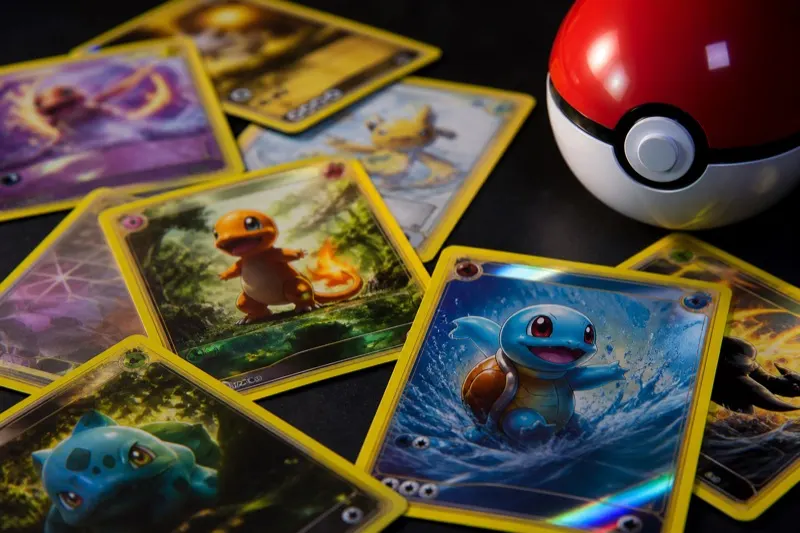
Collecting Pokémon cards is not opening packs until a binder is full. Three layers get mixed too early: play (sleeves), storage (toploaders, binders), and pieces you show. Anzena only equips the third. This guide sets the order — without selling inner sleeves.
Why a collection goes sideways
TCG paper (63 × 88 mm, sometimes a narrower Japanese size) is not archival. Foil, white border, ink: a finger, a binder ring, office sun are enough. Many start by putting everything on the same shelf — hits and bulk in the same binder — then discover too late that a full-art already has a whitened corner.
The market pushes you to grade everything. Grading a card that is already dinged repairs nothing: the grade photographs the state. Sorting, then protecting what you actually take out, costs fewer mistakes than sending twenty commons to PSA.
What damages a collection as it starts
- Pulling everything from the pack bare-handed, hits included.
- Binder rings marking the board every time a page turns.
- Hits and bulk in the same pockets: rubbing, corners.
- A toploader that is too tight, or a card forced with a thick sleeve.
- Window sun on a binder left open “for the photo”. Irreversible.
The order that holds — and where Anzena stops
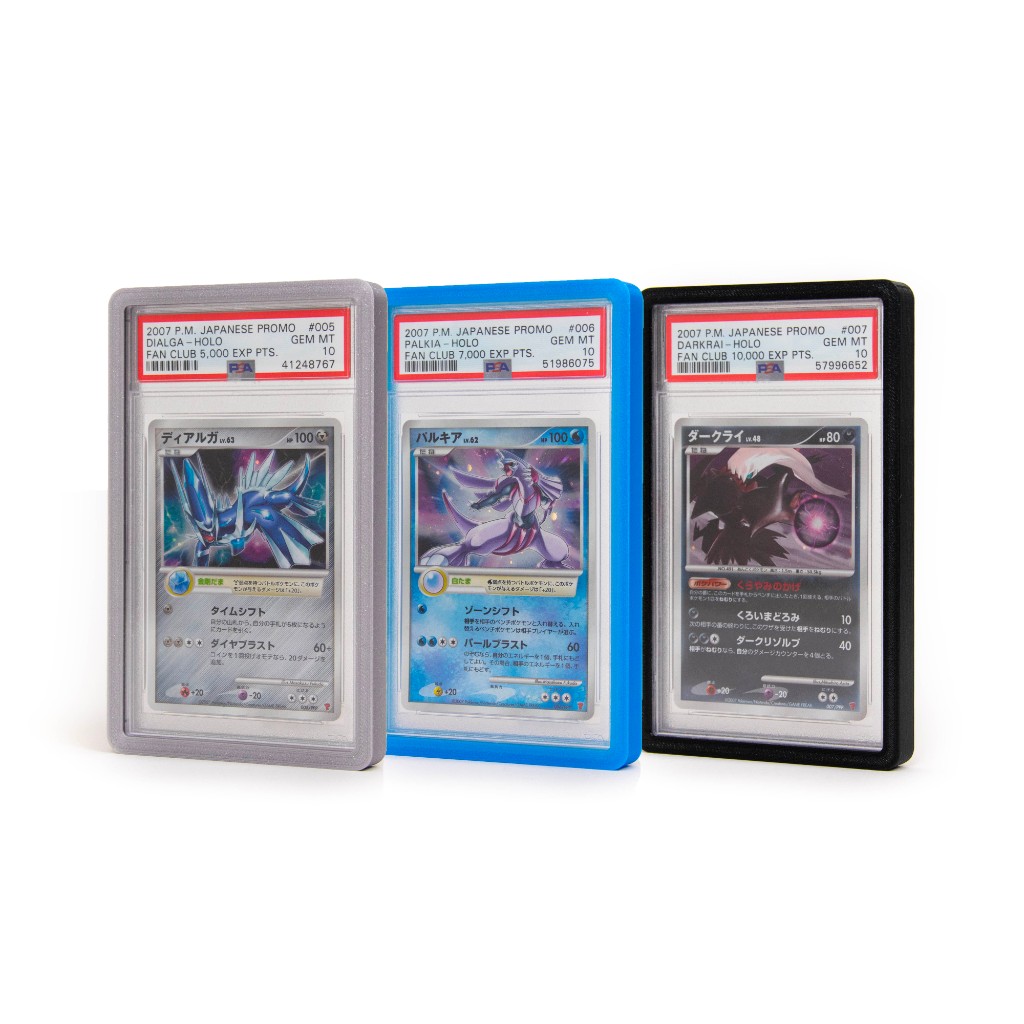
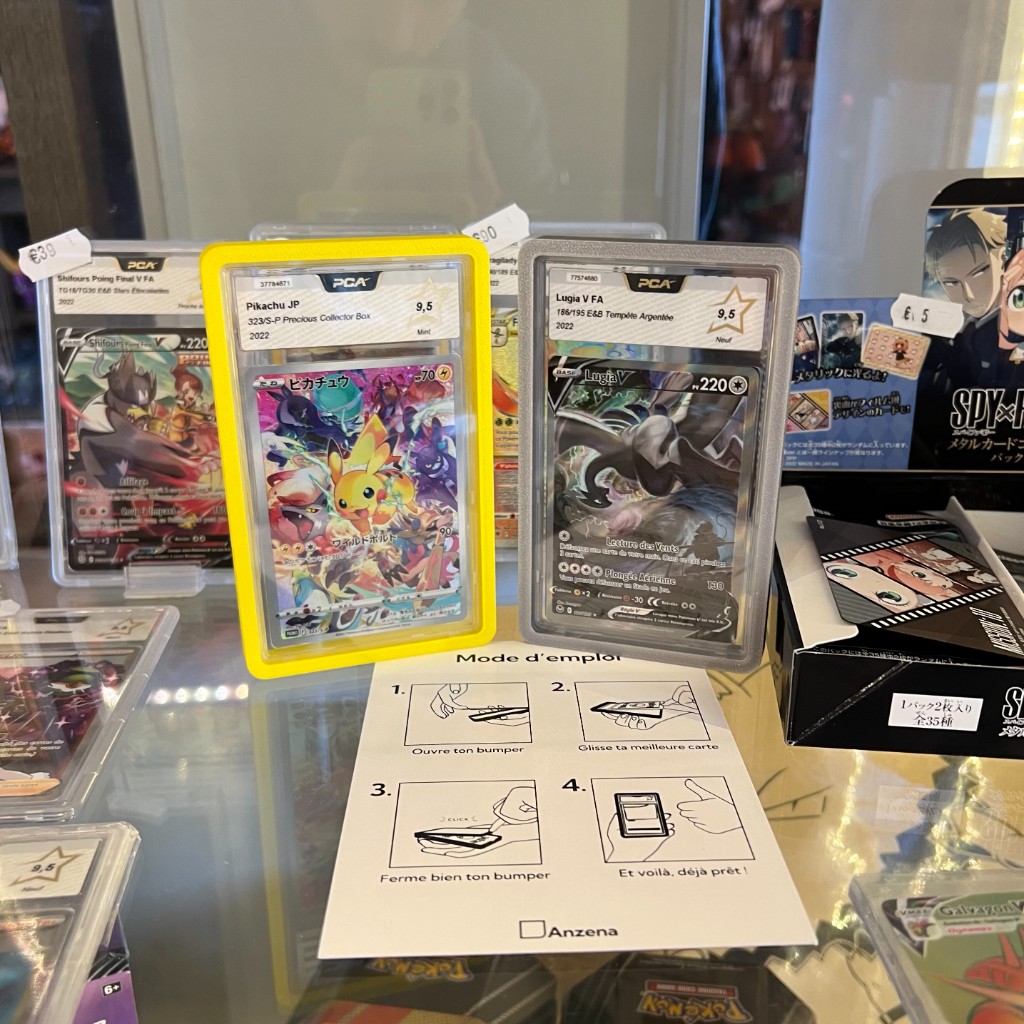
Play and bulk: penny sleeve or perfect fit, then toploader, from a TCG retailer. Anzena does not sell sleeves or binders. Hits to show: raw Pokémon bumper, once, then you no longer touch the paper. Already slabbed: the grader’s bumper (PSA, PCA, CCC), never a toploader. Wall: FlexLock + FlexWall.
- Pick a thread: a set, an era, a type, a language — not “all Pokémon”.
- Binder / toploader = volume. Bumper = the 10, 20, 50 cards you are willing to show.
- Grade only a card that is already clean, whose grade has a use (sale, insurance, display).
- Japanese Yu-Gi-Oh size ≠ standard Pokémon: the licence bumper follows the game.
Move a hit into a bumper
Paper does not force. If it resists, it is the wrong format (raw vs slab).
- 01Isolate the cards you actually take out — not the bulk.
- 02Open the Pokémon bumper (raw) or the grader bumper (slab).
- 03Slide it in flat, face readable, until it seats. Click shut.
- 04Keep toploaders and binders for the rest. FlexWall: FlexLock back.
Where to start, concretely
A theme avoids buying the same energy three times. A binder for the current set, a toploader box for duplicates, a “to show” pile that deserves the bumper. When that pile fits on a FlexFrame, you have a visible collection — not stock.
- Player → play sleeves (elsewhere) + toploader for transport.
- Set collector → binder, hits set aside.
- Display / gift / grail → Anzena bumper, optional engraving, optional wall.
FAQ
Do I need to grade everything to collect?+
No. Grading photographs a state, it does not create one. Keep it for cards that are already clean, that you have a use for (sale, display). The bumper protects raw and slab.
Does a Pokémon bumper fit a Japanese card?+
Yes if it is standard Pokémon size. A Japanese Yu-Gi-Oh size (59 × 86 mm) needs the Yu-Gi-Oh bumper, not the Pokémon one.
Where to start without mixing everything?+
One thread (set, type, language), a binder for volume, a short list of hits to bumper. Read “How to protect Pokémon cards” for the sleeve → toploader → bumper scale.
Anzena Club
Get 10% off and atelier drops.
Subscribe: CLUB10 after confirmation, plus bumper & FlexWall releases.
Besoin d’un format précis ?
Décrivez votre pièce — on vous oriente vers le bumper, le FlexWall ou un projet Factory.